

[ad_1]
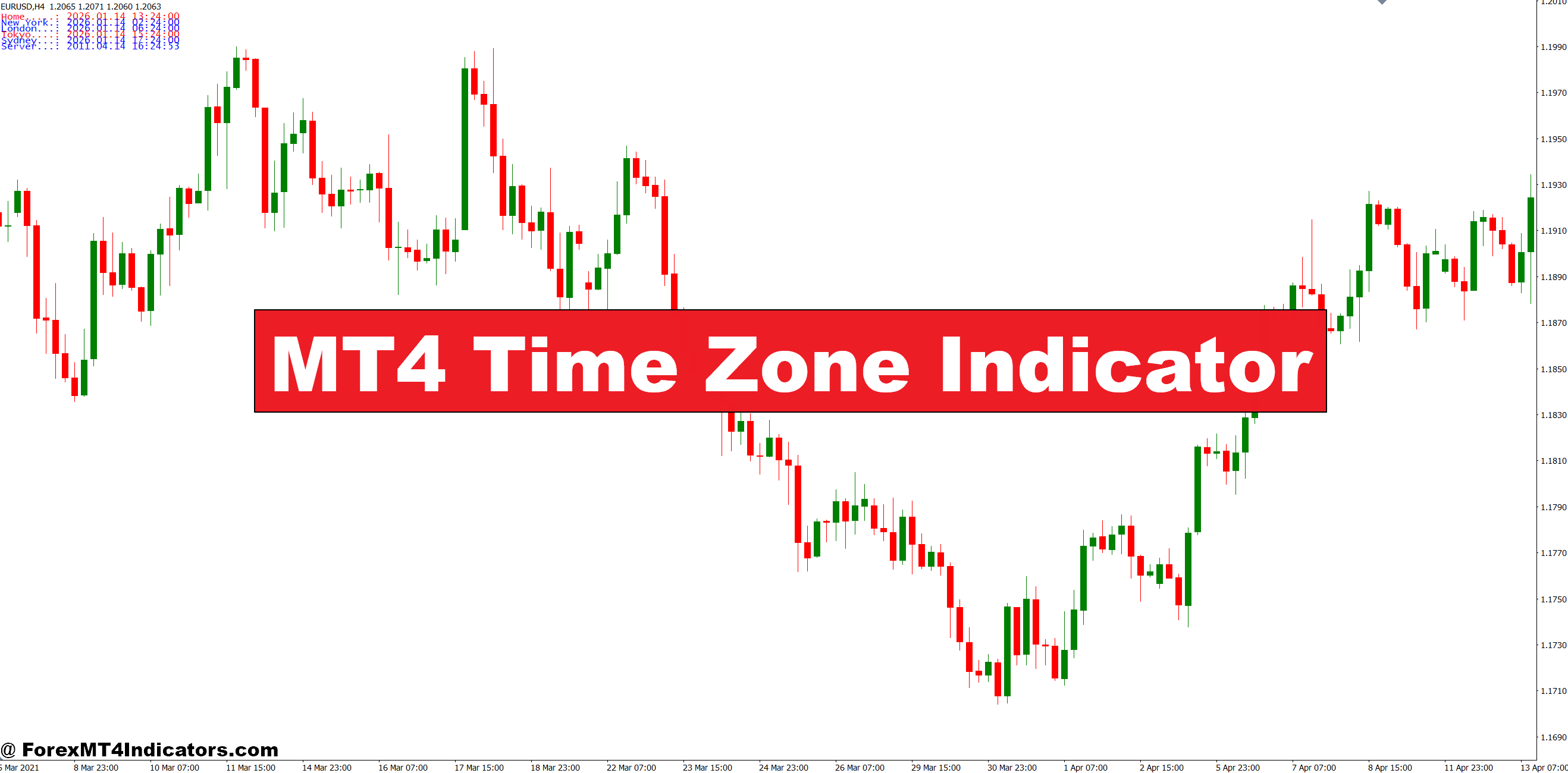
The MT4 Time Zone Indicator solves this drawback by overlaying vertical traces in your chart that mark when main buying and selling periods start and finish. As an alternative of guessing whether or not you’re buying and selling throughout Tokyo’s lunch break or New York’s opening rush, you’ll know precisely which session you’re in—and whether or not circumstances favor your technique.
What the MT4 Time Zone Indicator Really Does
The MT4 Time Zone Indicator is a visible overlay software that divides your value chart into segments representing totally different international buying and selling periods. It attracts vertical traces at particular instances similar to the opening and shutting of main monetary facilities: Tokyo, London, and New York.
Not like oscillators or transferring averages that react to cost, this indicator operates independently of market actions. It’s purely time-based. The traces seem at predetermined hours primarily based on GMT offset, making a framework that helps merchants determine when particular market individuals are lively. Some variations embody shaded packing containers or background colours to spotlight session durations, making it even simpler to identify session transitions at a look.
What units this other than merely your MT4 clock is the visible context. Once you see value conduct relative to session markers, patterns emerge. That breakout that failed? It occurred half-hour earlier than London shut when individuals have been squaring positions. That sturdy development? It began proper at New York open when quantity surged.
The Technical Setup and Logic
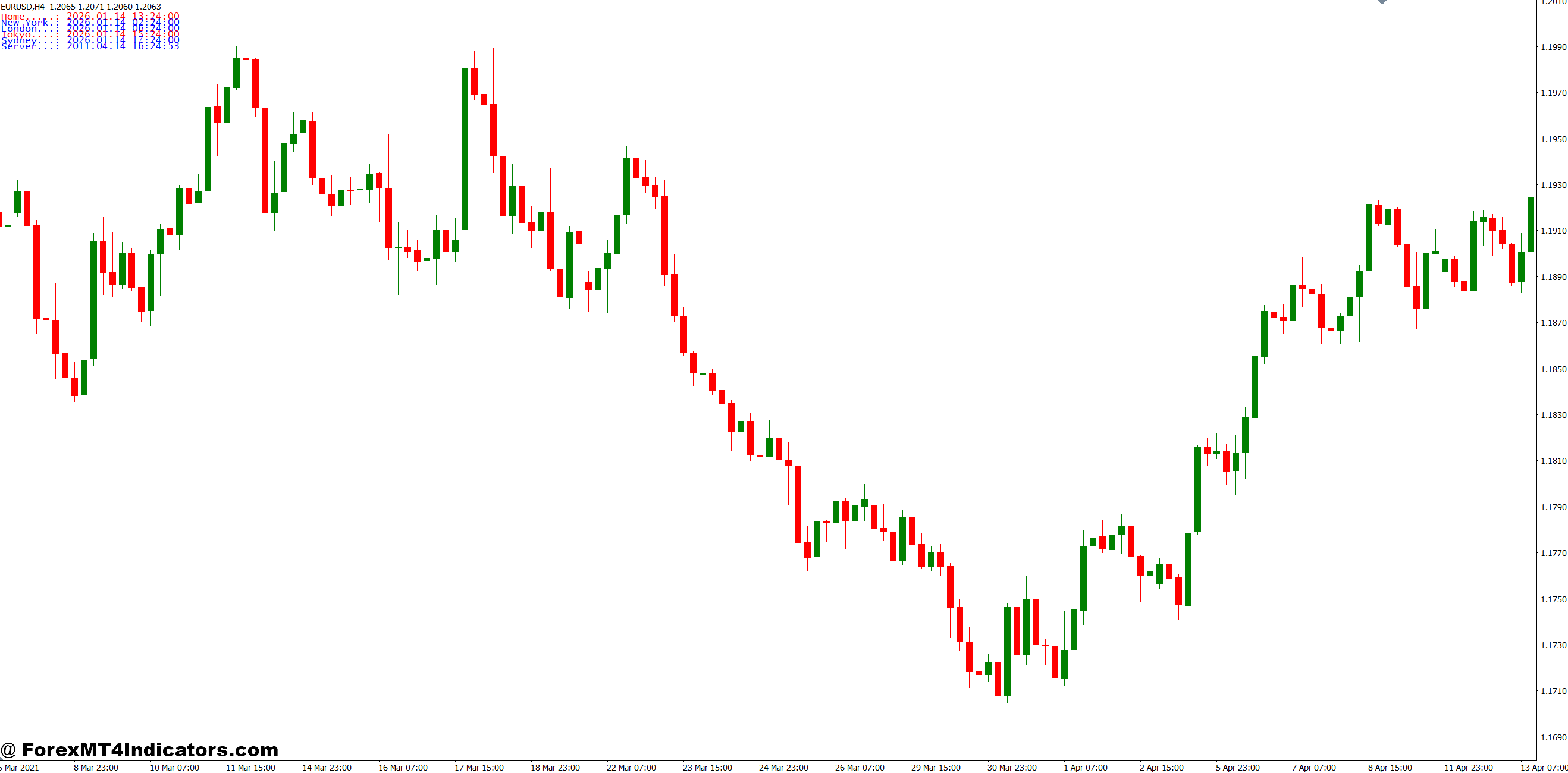
The indicator calculates show instances utilizing GMT offset parameters. Right here’s the way it works: You enter the GMT offset for every session you need to observe. For London, that’s usually GMT+0 (or GMT+1 throughout British Summer time Time). New York runs at GMT-5 (GMT-4 throughout daylight saving). Tokyo operates at GMT+9.
Once you connect the indicator to a chart, it scans by way of your historic knowledge and identifies each occasion the place the time equals your specified session begin time. At every prevalence, it attracts a vertical line. The method repeats for session shut instances.
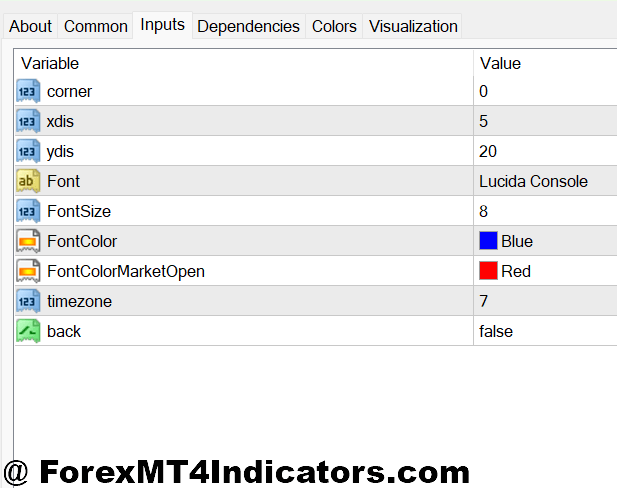
Most variations allow you to customise:
- Line colours for every session (blue for London, pink for New York, inexperienced for Tokyo)
- Line types (strong, dashed, dotted)
- GMT offset changes (essential for daylight saving adjustments)
- Whether or not to show labels exhibiting session names
- Line thickness and transparency
The calculation is simple, however the implementation issues. High quality indicators account for weekend gaps and alter robotically when your dealer’s server time adjustments. Cheaper variations may draw traces within the flawed locations should you don’t manually replace offsets.
Sensible Buying and selling Purposes
The true worth emerges while you mix session consciousness together with your current technique. Take EUR/USD on the 15-minute chart. In the course of the Asian session (roughly 23:00-08:00 GMT), this pair usually ranges inside 20-30 pips. Breakout merchants who don’t acknowledge this sample get chopped up by false breakouts. However watch what occurs at London open (08:00 GMT): The indicator line seems, and abruptly value expands 50-70 pips within the first hour.
Skilled merchants use these markers to time entries. Should you’re a breakout dealer, you await the London or New York session line to look earlier than taking setups. The elevated quantity throughout these periods means breakouts have higher follow-through. Conversely, vary merchants search for the quieter Asian session packing containers to fade extremes.
Right here’s a particular instance: GBP/JPY typically makes sharp strikes through the London-New York overlap (12:00-16:00 GMT). A dealer may await value to check a key degree throughout this window, realizing that if a breakout happens, there’s enough quantity to push it by way of. The identical degree examined throughout Tokyo hours? Most likely a fake-out.
Session markers additionally assist with stop-loss placement. That stated, putting stops simply inside session boundaries may be dangerous—sensible cash is aware of merchants do that and may hunt these stops earlier than the actual transfer.
Settings Configuration for Completely different Buying and selling Types
Scalpers working 1-minute to 5-minute charts want exact session markers. They’ll usually allow all three main periods with distinct colours and add labels. The visible muddle is price it as a result of they’re buying and selling session-specific volatility patterns.
Day merchants on 15-minute or 1-hour charts may simplify. Many show solely London and New York periods since these account for 70% of day by day foreign exchange quantity. They’ll use delicate line colours or semi-transparent background packing containers to keep away from chart muddle whereas sustaining session consciousness.
Swing merchants face totally different wants. On 4-hour or day by day charts, particular person session markers change into noise. These merchants may configure the indicator to point out solely weekly dividers or use it solely on decrease timeframes for entry timing whereas sustaining positions throughout a number of periods.
GMT offset adjustment deserves consideration. When daylight saving time kicks in (March and November for many Western international locations), you’ll must manually shift offsets by one hour. London goes from GMT+0 to GMT+1, New York from GMT-5 to GMT-4. Miss this adjustment, and your session traces seem an hour off—proper while you’re questioning why the “London open breakout” occurred at 07:00 as an alternative of 08:00.
Benefits and Trustworthy Limitations
The first benefit is simplicity. You’re not calculating something or deciphering alerts—you’re simply marking time. This makes the indicator worthwhile as a complementary software reasonably than a standalone system. Pair it with assist and resistance ranges, and also you’ve bought a framework: commerce breakouts throughout high-volume periods, fade extremes throughout low-volume durations.
It additionally forces self-discipline. Merchants typically make their worst errors throughout boredom. Seeing that you just’re within the Asian session may cease you from forcing trades when circumstances don’t fit your technique.
However right here’s the limitation no person mentions in promotional materials: Classes don’t assure something. Sure, London open usually brings volatility. However on days with no main information and lightweight quantity (suppose August or late December), even London can commerce like a morgue. The indicator reveals when periods happen—it doesn’t measure precise quantity or volatility.
One other downside is the handbook upkeep. Each daylight saving change requires adjustment. Neglect to replace, and also you’re making choices primarily based on incorrect session timing. Some merchants remedy this by subscribing to indicators that auto-adjust, however meaning ongoing prices.
The indicator can also’t account for one-off occasions. When the ECB pronounces coverage at 12:45 GMT (throughout London-New York overlap), that dominates value motion no matter typical session traits. Blindly buying and selling session patterns with out checking the financial calendar is asking for bother.
How It Compares to Various Approaches
Some merchants skip devoted indicators and use MT4’s built-in vertical line software to manually mark periods. This works however requires day by day setup and doesn’t persist throughout timeframes. The benefit? Full customization and 0 indicator load in your charts.
Dealer time indicators are an alternative choice—they show dealer server time in your chart. Whereas helpful, they require psychological calculation to find out which session you’re in. The time zone indicator eliminates that step.
Extra superior alternate options embody volume-based session indicators that shade high-volume durations reasonably than counting on fastened instances. These adapt to precise market circumstances however value extra and require interpretation. The straightforward time zone indicator’s energy is its objectivity—08:00 GMT is London open whether or not you prefer it or not.
Making the Time Zone Indicator Work for You
The MT4 Time Zone Indicator received’t make you a worthwhile dealer by itself. It’s a clock with fancy traces. However mixed with sound technique, it turns into a timing mechanism that retains you buying and selling when circumstances align together with your edge.
Begin by monitoring how your current trades carry out throughout totally different periods. You may uncover your breakout technique works fantastically throughout London however fails throughout New York. Or that your EUR/USD vary buying and selling solely succeeds throughout Tokyo hours. The indicator makes this evaluation visible and quick.
Configure it primarily based in your type, alter for daylight saving religiously, and do not forget that session timing is only one variable amongst many. Worth motion, information occasions, and total market sentiment can override typical session conduct. Buying and selling foreign exchange carries substantial threat. No indicator ensures income, and session-based buying and selling nonetheless requires strong threat administration and lifelike expectations.
The true query isn’t whether or not this indicator works—it’s whether or not you’re disciplined sufficient to make use of the data it offers. Time zones don’t change. Your capacity to attend for the precise session does.
Beneficial MT4/MT5 Dealer
XM Dealer
- Free $50 To Begin Buying and selling Immediately! (Withdraw-able Revenue)
- Deposit Bonus as much as $5,000
- Limitless Loyalty Program
- Award Successful Foreign exchange Dealer
- Extra Unique Bonuses All through The Yr
- Unique 90% VIP Money Rebates for all Trades!

>> Signal Up for XM Dealer Account right here with Unique 90% VIP Money Rebates For All Future Trades [Use This Special Invitation Link] <<
Already an XM consumer however lacking out on cashback? Open New Actual Account and Enter this Associate Code: VIP90
(Free MT4 Indicators Obtain)


[ad_2]
Supply hyperlink